
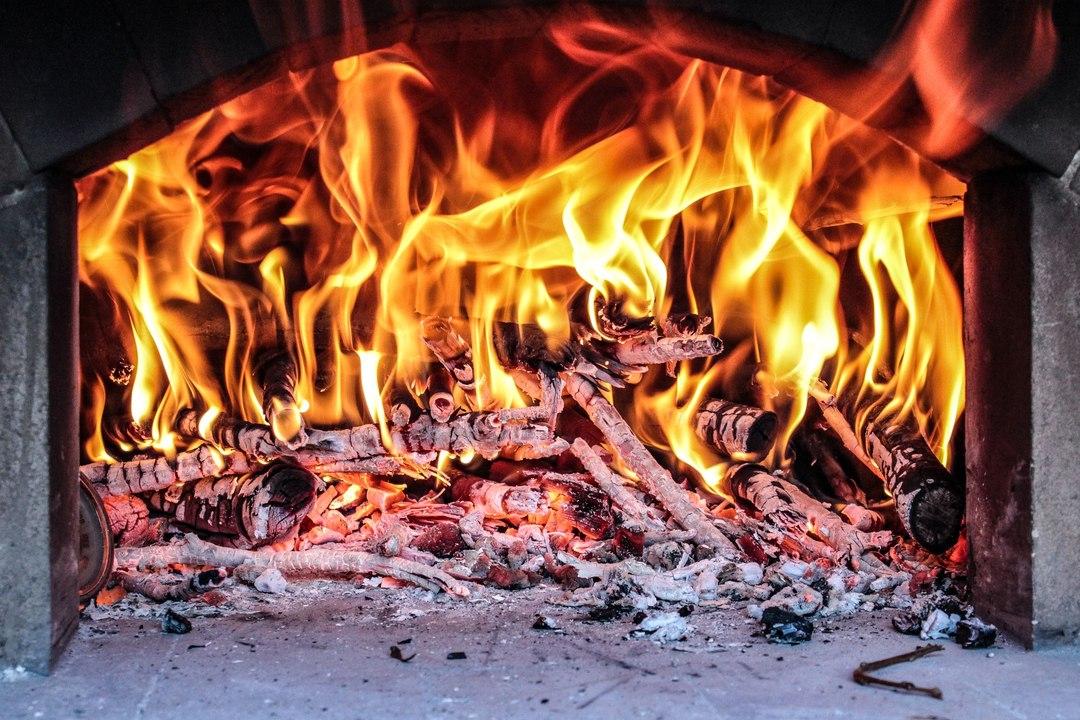
Fireplace Inspection That Answers Whether Gas Will Fit
Wood, Gas or Somewhere Between?
Say what the fireplace burns and what you would change about it. We ring back to arrange a visit.
Included in This Service
Most conversions start at the hearth, so this visit stays there. We look over the firebox walls and floor for cracks, work the damper, take the width and height of the opening and how far the hearth runs out, and note any gas stub or key valve already in place. You end up knowing which gas options fit that box and what would have to change before one goes in.
The Room Side of a Gas Conversion
Most of what decides a gas conversion sits right in the living room. The firebox has to be the right shape for a log set or deep enough for an insert. The hearth in front has to be sound and wide enough for the unit you choose. The damper has to either hold open for good, for vented logs, or come out of the way, for an insert liner. And there has to be gas at the fireplace in a pipe big enough to feed the burner. A fireplace inspection looks at all of that. We take the opening's dimensions, check the firebrick and the joints between bricks, work the damper, look at the face and the mantel for heat marks, and find the gas key or valve if there is one. Many older fireplaces in Compton and Lynwood have a small gas line meant only to light kindling, and that line often has to be upsized before a full set goes in.
A Level 1 inspection is $56 and includes the fireplace and the parts of the chimney we can reach and see. The fireplace notes come back sorted by option. Under gas logs, we note the firebox size range a set would need, the state of the damper and whether the gas line looks adequate. Under an insert, we note the opening dimensions, the hearth depth and whether the damper or smoke shelf would block a liner. Under a new direct-vent unit, we simply note that the fireplace is not in play and why that route might suit you. If we find a crack in the firebox floor, a loose firebrick or a cracked hearth, the notes say whether it needs fixing before gas, after gas or not at all, since a gas burner puts far less heat into the box than a wood fire does. That way you shop for a unit with the numbers in hand.
When the Fireplace Already Burns Gas
A good share of fireplaces we see already have gas, often a log set put in by a past owner or a factory-built box from a remodel. Inspecting those is its own job. With a log set, we look at how the logs sit on the grate, whether soot marks show they have been moved, whether the pilot and burner light cleanly and whether the damper is held open with a clamp, which a vented set needs. With a factory-built gas fireplace, we check the glass and its seal, the pilot assembly, the venting where we can see it and the labels on the unit. Each of these is cheap to look at and costly to ignore, because a gas fire burning with poor venting puts carbon monoxide into the room without any smoke to warn you. Every room with a gas fireplace should have a working carbon monoxide alarm, and we mention it if we do not see one.
If you are buying a home with a gas fireplace, a fireplace inspection is a sensible add to your other checks. Many listings in Bellflower and Compton describe a fireplace as working without anyone having lit it in years. We light it with you present if that is safe, note how the flame behaves and what we find, and tell you plainly whether it is ready to use, needs a cleaning or needs a repair. For repairs, the written notes become the basis of a quote. For a full real estate inspection with a camera run up the flue, our page on home sale chimney inspections lays out what the Level 2 covers and who receives the report. To book a fireplace inspection, use the contact page and tell us whether the fireplace burns wood, gas logs or is a sealed gas unit.
How Chase Chimney Solutions Works
Flue Before Fuel
No gas unit goes on an unchecked chimney
Options Side by Side
Logs, insert or wall unit, each priced
Price on Paper
Written figure before parts are ordered
Lit With You
Gas work finished with a test light
Where we offer fireplace inspection
Choose a city for notes on its homes, its ZIP codes and the weather its chimneys deal with.
CA
Fireplace Inspection in Paramount
Detached houses make up 42% of homes here, owners hold 43%. Where an older one still has a fireplace, the flue is usually brick, so our gas insert quotes start by sizing a liner to it and checking the firebox walls.
City detailsCA
Fireplace Inspection in Bellflower
Tract streets spread over old farm and dairy parcels fast, 1940s into the 1950s, so 71% of homes predate 1980. Inside a small ranch living room, gas logs are the plain switch, as long as damper and flue pass our inspection.
City detailsCA
Fireplace Inspection in Lynwood
From the 1920s into the 1950s, the dairies here turned into streets of houses, and 45% of homes are older than 1950. A flue that old often wants a liner before a gas insert can use it. A log set asks less, yet still needs sound masonry.
City detailsCA
Fireplace Inspection in Compton
Lots of 1950s and 1960s homes here kept a brick or block chimney and picked up gas logs along the way. If yours already runs on gas, the step up is an insert or a sealed direct-vent box, and each asks something different of the flue.
City detailsMore Fireplace and Chimney Services
Chimney Sweep
Flue brushing for a fireplace you still burn in, or one about to go over to gas, with the deposit described plainly.
Read more →Chimney Inspection
A look at the whole chimney before a fuel change, so you know whether the flue can carry gas exhaust as it stands.
Read more →Chimney Repair
Mending the stack itself, crown, joints, tile and flashing, so the gas or wood appliance below has a sound way out.
Read more →Fireplace Repair
Firebox brick, panels, hearth and damper put right, whether the fireplace keeps burning wood or is being readied for gas.
Read more →Chimney Level 2 Inspection
A camera pass from firebox to cap with attic and roof checks, the inspection NFPA 211 asks for when the fuel or appliance changes.
Read more →Chimney Cap Installation
A metal top with ember mesh over each flue, sized for the appliance, wood or gas, that will vent through it.
Read more →Chimney Flashing Repair
The seam where roof meets brick resealed with step and counter metal, so winter storms stay on the roof side.
Read more →Chimney Masonry Repair
Brick, stone and mortar repairs on the stack, matched in color and hardness, before or after a fuel switch.
Read more →Chimney Rebuilds
A stack cracked by quakes or water taken apart to where the brick holds, then laid up again for the next appliance.
Read more →Fireplace Cleaning
The room side of a wood fireplace cleared of ash, soot and haze, often the last clean before gas logs go in.
Read more →Gas Fireplace Cleaning
Yearly service for gas units: glass, burner ports, pilot, logs and vent cleared so the flame burns blue and even.
Read more →Gas Fireplace Repair
Pilots that drop out, burners that sputter and remotes that do nothing, traced with a meter to the one part that failed.
Read more →Fireplace Remodel
A new face, hearth and firebox plan for the switch from wood to gas, laid out around the unit you choose.
Read more →Fireplace Inserts
A closed gas, wood or pellet box set into the old firebox with its own liner, so the fireplace starts heating the room.
Read more →Pellet Stove Repair
Hoppers that stop feeding, igniters that fail and stoves that shut off mid burn, sorted by testing one part at a time.
Read more →Wood Stove Repair
Gaskets, baffles, combustors and stovepipe on wood stoves kept working, with a straight view on when gas makes more sense.
Read more →Gas Logs
Ceramic logs over a gas burner on the old grate, for owners who want a fire at the turn of a knob.
Read more →Chimney Seismic Retrofit
Brick stacks above the roof braced, strapped or rebuilt lighter, so a strong quake is less likely to drop them onto the house.
Read more →Chimney Crown Repair
The mortar or concrete top over the brick sealed or recast, so rain stops getting into the stack from above.
Read more →Dryer Vent Cleaning
Lint cleared from the dryer duct through to the outside hood, so loads dry in one cycle and the machine runs cooler.
Read more →Chimney Liner Installation
A stainless liner run up the old flue, sized to the gas, wood or pellet appliance it will serve.
Read more →Chimney Leak Repair
Damp walls and drips near the fireplace traced on the roof and fixed at the point where rain actually gets in.
Read more →Chimney Waterproofing
Water repellent brushed onto repaired brick, letting the stack dry out while winter storms run down its face.
Read more →Chimney Damper Repair
A damper that sticks, rattles or leaks air fixed or swapped, including the stop a vented gas log set needs.
Read more →Chimney Chase Cover
A new metal lid for a framed chimney chase, made to measure, so water stops running into the box below.
Read more →